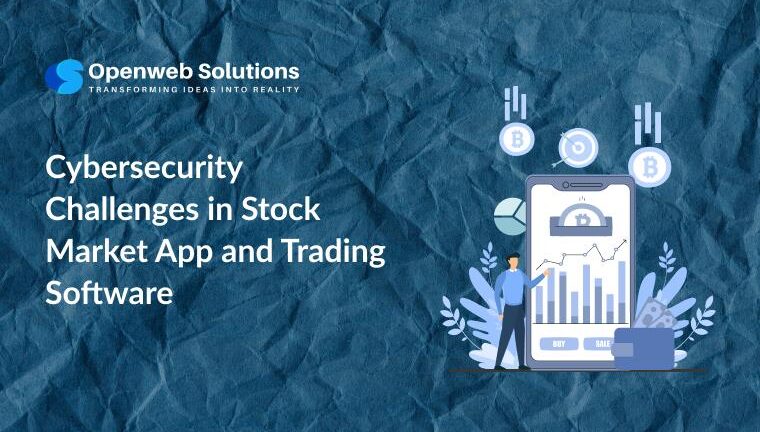
Why Cybersecurity Is Critical for Stock Market App Trading Platforms
It processes a huge volume of financial data and transactions every day. Investors rely on these platforms to manage their portfolios and track market performance. Trading platforms store sensitive information such as user credentials, banking details, transaction history, portfolio data, and personal identification information. Cybersecurity is a critical factor that determines user trust and regulatory compliance.
Major Cybersecurity Challenges in Stock Market App Software
Data Breaches & Financial Data Theft
One of the biggest risks in trading software is data breaches. Hackers often attempt to access databases containing financial and personal information. A successful breach can expose investor account information, transaction details, market data feeds, and financial records.
Phishing Attacks on Stock Market App Investors
These are a common threat targeting users of stock trading platforms. Cybercriminals create fake emails or websites that look like legitimate trading portals. These scams trick users into sharing login credentials, one-time passwords, and banking information. They can gain unauthorized access to trading accounts and perform fraudulent transactions.
Malware & Ransomware Threats
Malware attacks are another major challenge for stock market applications. Hackers may deploy malicious software that infiltrates trading systems and steals sensitive information. Ransomware attacks can also lock critical trading systems and demand payment to restore access.
API Security Vulnerabilities
Modern online trading platforms rely on APIs to connect with stock exchanges and third-party financial services. While APIs make systems more efficient, they also introduce security risks. Poorly secured APIs can allow attackers to manipulate trading data, access private user accounts, and interfere with transaction processes.
Insider Threats in Stock Market App
Cybersecurity risks are not always external. Insider threats occur when employees or authorized users misuse their access to sensitive systems. In a stock trading platform, insider threats may involve unauthorized access to client data, manipulation of trading algorithms, and data leakage.
Data Protection Risks in Stock Market App Online Trading Platforms
Protecting user data is one of the most critical responsibilities of companies that build stock market applications. Common data security challenges include weak encryption protocols, insecure cloud storage, poor database protection, and lack of real-time monitoring. Implementing advanced encryption methods and secure data storage solutions helps protect sensitive financial information.
API and Integration Security Issues in Stock Market App
Authentication plays a crucial role in protecting stock market software from unauthorized access.
Importance of Secure Authentication Systems in Stock Market App
Traditional password-based login systems are no longer sufficient. Modern stock trading platforms must adopt stronger authentication mechanisms such as multi-factor authentication, biometric authentication, and secure token-based login systems.
Best Practices for Securing Stock Market App Applications
To address cybersecurity challenges effectively, developers and businesses must implement security measures when building trading software. Some best practices include:
- All financial data and communications should be encrypted using advanced protocols like SSL/TLS.
- Frequent vulnerability testing helps identify potential security flaws in stock market software.
- All APIs should be protected with authentication tokens and strict access control.
- AI-powered monitoring systems can detect suspicious activities and prevent cyberattacks before they cause damage.
- Educating users about phishing scams and safe trading practices can significantly reduce security risks.
Build a Secure Stock Market Software with Us
Our expert development team specializes in creating high-performance stock trading platforms with advanced security features and scalable architecture.
Contact us today to discuss!
Conclusion on Stock Market App Cybersecurity
The growing popularity of digital trading has made online trading platforms essential for investors and financial institutions. Modern trading software must be designed with strong security frameworks to protect sensitive financial information. Developers and financial businesses must prioritize cybersecurity when building stock trading platforms. In the world of digital finance, strong cybersecurity is a fundamental requirement for the success of any stock market application.
Thank you for reading.
FAQs
Q1. What is stock market software?
Ans: It is a digital platform that allows users to monitor market data and execute trades through an online system.
Q2. Why is cybersecurity important in trading software?
Ans: It protects financial transactions and trading systems from hacking and unauthorized access.
Q3. What are common threats to stock trading platforms?
Ans: Common threats include phishing attacks, malware, data breaches, API vulnerabilities, and insider threats.

Partha Ghosh is the Digital Marketing Strategist and Team Lead at PiTangent Analytics and Technology Solutions. He partners with product and sales to grow organic demand and brand trust. A 3X Salesforce certified Marketing Cloud Administrator and Pardot Specialist, Partha is an automation expert who turns strategy into simple repeatable programs. His focus areas include thought leadership, team management, branding, project management, and data-driven marketing. For strategic discussions on go-to-market, automation at scale, and organic growth, connect with Partha on LinkedIn.