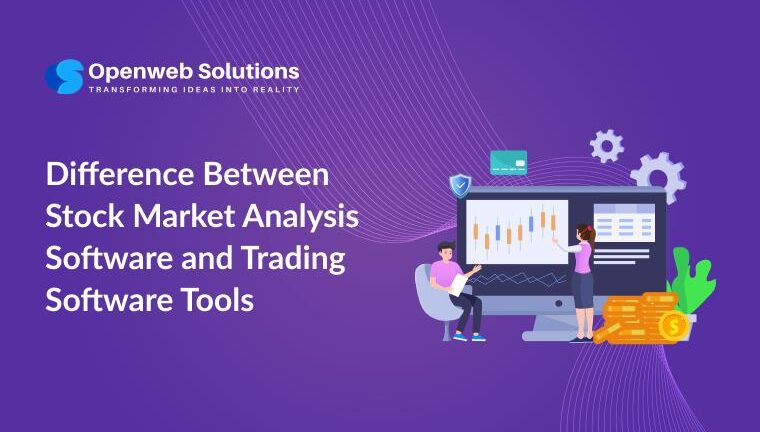
Definition of Stock Market Analysis Software
These are software applications designed to help traders and investors evaluate stocks before making trading decisions. These tools analyze large amounts of financial data and convert them into useful insights.
It often includes advanced charting features and market trend analysis. Traders can use these tools to understand historical price movements and predict future market behavior. Key purposes of stock analysis tools include analyzing historical stock price data, identifying market trends and patterns, evaluating company fundamentals, performing technical analysis, and screening stocks based on specific criteria.
Know About Trading Software
It is a platform that allows traders to buy and sell financial assets such as stocks, commodities, currencies, and derivatives. These platforms are connected to stock exchanges and brokerage systems, enabling real-time trading. Modern trading analysis software often includes basic analysis features, but its primary focus remains on order execution and portfolio management.
Main functions of trading software include placing buy and sell orders, monitoring trading positions, tracking portfolio performance, accessing real-time market data, and receiving trading alerts.
Key Differences Between Stock Market Analysis Software & Trading Software
| Feature | Stock Market Analysis Software | Trading Software |
|---|---|---|
| Main Purpose | Market research & analysis | Execute trades |
| Data Usage | Historical & analytical data | Real-time trading data |
| Key Users | Analysts, investors, research teams | Active traders and brokers |
| Functions | Charting, screening, technical analysis | Order execution, portfolio tracking |
| Trading Capability | Usually not available | Core functionality |
Features of Stock Market Analysis Tools
These are designed to provide deep insights into the market. These tools are widely used by analysts and financial researchers.
Charts are one of the most important components of stock trading analysis software as they allow traders to visualize price movements over time.
Indicators such as moving averages and MACD help traders identify trends and potential entry or exit points.
Stock screeners allow traders to filter stocks based on criteria like price range, volume, market capitalization, and technical patterns.
These tools analyze company financial data such as revenue and balance sheets to determine the intrinsic value of stocks.
Many stock market analysis tools provide insights into market sentiment and industry trends.
Features of Trading Software
It focuses on enabling fast and reliable trading in financial markets.
One of the most important features of trading platforms is the ability to execute orders instantly when market conditions change.
Traders can track multiple stocks simultaneously through customizable watchlists.
Trading platforms allow users to monitor profits and portfolio performance in real-time.
Modern trading analysis software provides alerts based on price movements or specific market conditions.
Many trading platforms support multiple exchanges, allowing traders to access various markets from a single interface.
How Traders Use Tools Together
Most professional traders use stock market analysis tools and trading software together. The workflow looks like this: traders analyze stocks using stock trading analysis software, identify potential trading opportunities, place orders through trading software, and make better decisions while executing trades more efficiently.
Many modern fintech platforms now integrate stock analysis tools and trading software into a single ecosystem.
Build a Custom Trading Platform with Us
Working with an experienced fintech development team can make a huge difference. Contact our experts today!
Conclusion
Technology has transformed the way people trade in the financial markets. Stock market analysis tools and trading software play essential roles in helping traders make informed decisions and execute trades efficiently. Understanding the difference between these tools is crucial for traders and fintech companies developing trading platforms.
Thank you for reading.
FAQs
Q1. What is the main difference between trading software and stock analysis tools?
Ans: The main difference is that stock analysis tools help traders analyze market data and trends, while trading software allows them to execute buy and sell orders in the market.
Q2. Can stock market analysis tools be used for trading?
Ans: Most tools focus on research and analysis and do not support direct trading. However, some advanced platforms integrate analysis and trading features.
Q3. What are examples of trading software?
Ans: Common examples include online brokerage platforms and professional trading terminals.

Partha Ghosh is the Digital Marketing Strategist and Team Lead at PiTangent Analytics and Technology Solutions. He partners with product and sales to grow organic demand and brand trust. A 3X Salesforce certified Marketing Cloud Administrator and Pardot Specialist, Partha is an automation expert who turns strategy into simple repeatable programs. His focus areas include thought leadership, team management, branding, project management, and data-driven marketing. For strategic discussions on go-to-market, automation at scale, and organic growth, connect with Partha on LinkedIn.