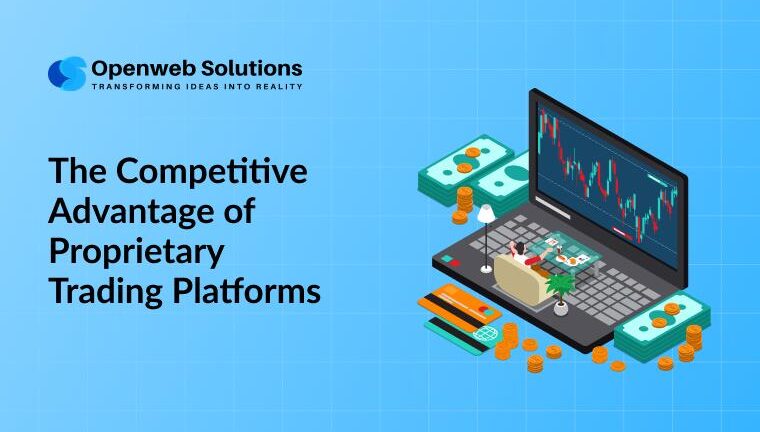
In today’s financial ecosystem, technology is the backbone of modern trading. As investors demand real-time insights and intelligent analytics, businesses must go beyond generic solutions. This is where proprietary trading platforms create a competitive edge. While many brokers rely on third-party systems, forward-thinking firms are investing in custom-built stock platforms have their strategy and growth plans. They specialize in developing domain-specific trading platform software designed to provide performance and long-term scalability. This blog explores how proprietary systems outperform standard brokerage trading platforms.
Table of Contents
- Definition of Proprietary Trading Platform
- Limitations of Generic Online Trading Platforms
- Key Competitive Advantages of Trading Platform Software
- Enhanced User Experience and Client Retention
- Scalability and Multi-Exchange Capabilities
- Monetization and Revenue Opportunities
- Future-Proofing Your Brokerage Business
Definition of Proprietary Trading Platform
It is a custom-built online trading platform developed specifically for a brokerage or financial institution. Unlike white-label or third-party brokerage trading platforms, proprietary systems are owned and controlled by the company that uses them. These platforms typically include real-time market data streaming, advanced charting tools, fundamental analysis modules, custom stock screeners, alert systems, multi-asset trading capabilities, and performance tracking dashboards.
Limitations of Generic Online Trading Platforms
Many brokers begin with off-the-shelf solutions. While these systems provide quick market entry, they often create long-term limitations:
Restricted Customization
You are limited to predefined features and interface structures.
Shared Infrastructure
Performance may be affected during high-volume trading sessions.
Branding Constraints
Your brokerage becomes dependent on another company’s ecosystem.
Limited Innovation
Rolling out new features requires vendor approval or costly add-ons.
Key Advantages of Custom Trading Platform Software
Full Customization
A trading platform is built around your users’ needs. Whether your audience includes high-frequency traders, retail investors, or institutional clients, the interface and functionality can be tailored accordingly. Features can include custom market watchlists, user-defined trading indicators, advanced screening formulas, real-time push notifications, and personalized dashboards.
Performance and Speed Optimization
Proprietary trading platform software can be optimized for low-latency order execution, high-speed data processing, scalable cloud infrastructure, and stable performance during market volatility. Unlike shared online trading platform, custom systems can be engineered specifically for performance under heavy loads.
Multi-Exchange and Multi-Asset Integration
Modern investors expect access to equity markets, derivatives, commodities, currencies, and mutual funds. A proprietary system can integrate multiple exchanges and asset classes within one unified interface, providing traders with portfolio management.
User Experience and Client Retention
A good trading platform is intuitive, and user experience directly impacts customer retention. With proprietary development, you can design clean navigation, reduce execution steps, provide real-time alerts, enable customizable layouts, and integrate advanced charting tools. When traders feel comfortable and confident using your stock trading platform, they are less likely to migrate to competitors.
Scalability and Growth Flexibility
As your brokerage expands, your technology must scale with it. Proprietary trading platform software allows modular feature expansion, API integrations with third-party services, mobile and desktop synchronization, cloud-based scalability, and international market expansion. This flexibility becomes a major competitive advantage over brokers dependent on rigid third-party systems.
Monetization and Revenue Opportunities
Custom platforms unlock additional revenue channels beyond transaction fees. You can integrate premium analytics subscriptions, advanced charting packages, AI-based trading signals, portfolio advisory tools, API access for institutional clients. Proprietary systems allow complete flexibility in pricing models.
Innovation as a Long-Term Strategy
New regulations, new asset classes, and new trading behaviours emerge constantly. Owning your trading platform software allows faster innovation to deploy new features without vendor delays, integrate algorithmic trading tools, introduce AI-driven insights, and adapt to emerging fintech trends.
Why Proprietary Platforms Build Brand Authority
When users interact with a unique and high-performance stock trading platform, they associate that experience directly with your brand. You become a technology-driven financial ecosystem and brand differentiation is tied to technological excellence.
Conclusion
In a competitive financial landscape, technology determines leadership. Proprietary trading platforms provide control, flexibility, performance optimization, and monetization advantages that generic online trading platforms cannot match. From enhanced security to advanced analytics and multi-exchange integration, custom stock trading platforms empower brokerages to innovate faster and scale confidently. For businesses aiming to establish long-term dominance in the trading ecosystem, investing in proprietary trading platform software is a strategic necessity.
Frequently Asked Questions
Q1. What makes a good trading platform?
Ans: A good trading platform combines speed, reliability, intuitive design, advanced analytics, strong security, and multi-asset integration.
Q2. Is proprietary trading platform software expensive?
Ans: Initial development costs are higher than white-label solutions, but long-term ROI is greater due to scalability, reduced licensing fees, and monetization flexibility.
Q3. Can a proprietary stock trading platform support mobile users?
Ans: Yes. modern development includes responsive web platforms and mobile apps for seamless trading experiences.

Partha Ghosh is the Digital Marketing Strategist and Team Lead at PiTangent Analytics and Technology Solutions. He partners with product and sales to grow organic demand and brand trust. A 3X Salesforce certified Marketing Cloud Administrator and Pardot Specialist, Partha is an automation expert who turns strategy into simple repeatable programs. His focus areas include thought leadership, team management, branding, project management, and data-driven marketing. For strategic discussions on go-to-market, automation at scale, and organic growth, connect with Partha on LinkedIn.