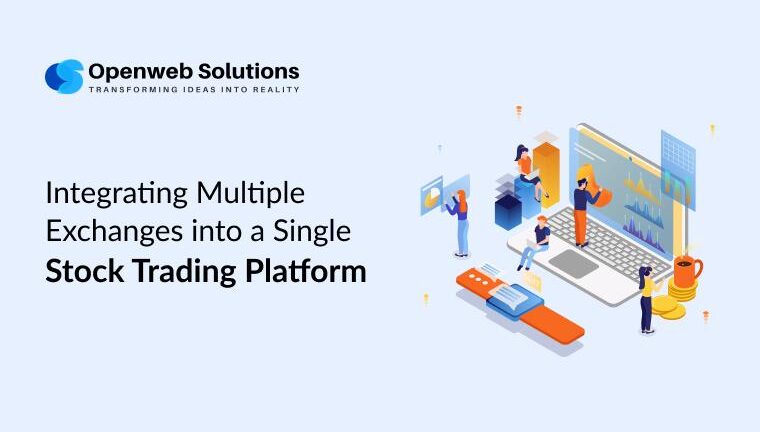
In today’s financial ecosystem, traders and brokers demand speed and flexibility. Relying on a single exchange is no longer sufficient for businesses aiming to serve diverse trading needs. This is where integrating multiple exchanges into a single stock trading platform becomes a strategic advantage.
Definition of Multi-Exchange Integration
It refers to the process of connecting different stock exchanges such as NSE, BSE, MCX, or international exchanges into a single trading platform software. Instead of managing separate systems for each exchange, all trading operations and analytics are centralized. This approach allows traders to monitor multiple markets simultaneously, execute trades across exchanges from one dashboard, and analyse unified data streams without switching platforms. It means streamlined operations and reduced infrastructure complexity for businesses.
Why Trading Platforms Need Multi-Exchange Integration
The financial market landscape has evolved rapidly. Traders no longer focus on a single asset class or exchange. They want diversified opportunities and consolidated insights. Modern stock market trading platforms must support multi-asset trading, high-frequency data processing, cross-exchange price comparison and arbitrage opportunities. Platforms risk losing users to competitors offering broader market access and better usability without multi-exchange integration.
Key Benefits of Integrating Multiple Stock Platforms
Enhanced User Experience
A single interface for multiple markets simplifies trading workflows. Users can track prices and manage portfolios without juggling multiple tools.
Expanded Market Reach
By integrating several stock exchange platforms, brokers can offer access to regional and global markets, attracting a wider user base.
Improved Liquidity & Faster Execution
Access to multiple exchanges increases liquidity, leading to better pricing and faster order fulfilment.
Centralized Data & Analytics
Unified market data enables advanced charting and performance tracking of high-end stock exchange software.
Operational Efficiency
Managing one centralized system reduces maintenance costs and simplifies compliance and reporting processes.
Core Technical Components of Trading Platform Software
Building a unified system requires a well-planned technical architecture. Key components include:
API Integration Layer
APIs connect the platform to different exchanges, enabling real-time data streaming, order placement, and trade confirmations.
Data Normalization Engine
Different exchanges use different data formats. Normalization ensures consistent data presentation across the platform.
Order Management System
The OMS routes orders to the appropriate exchange and tracks order status in real time.
Risk & Compliance Modules
Built-in controls help monitor exposure and comply with regulatory requirements.
Scalable Infrastructure
Cloud-based architecture ensures high availability and scalability during peak trading hours.
Common Challenges in Multi-Exchange Integration
While the benefits are significant, integration comes with challenges like latency issues due to high-frequency data processing, data inconsistencies between exchanges, complex regulatory compliance across markets, security risks involving sensitive financial data, and system scalability during market volatility. Addressing these challenges early is critical to building reliable stock market trading platforms.
Best Practices for Building Stock Market Trading Platforms
- Choose reliable exchange APIs to ensure they are stable and support real-time operations.
- Design a modular architecture to add or remove exchanges without affecting the core platform.
- Focus on performance optimization to use caching and real-time monitoring to reduce latency.
- Prioritize security to implement encryption and regular security audits.
- Plan for scalability to handle traffic spikes during high-volume trading sessions.
Build a Powerful Stock Trading Platform with Us
Partner with experts in stock exchange software development to create a secure and high-performance trading solution for your business needs. Contact us today for project assessment!
Conclusion
Integrating multiple exchanges into an online trading platform is a necessity for modern financial businesses. A unified approach enhances user experience and improves operational efficiency while positioning your platform for future growth. With the right architecture and development strategy, businesses can build powerful trading platform software that meets the demands of today’s dynamic markets.
Thank you for reading.
Frequently Asked Questions
Q1. What is a multi-exchange trading platform?
Ans: It is a platform that allows users to trade across multiple stock exchange platforms using a single interface.
Q2. Is multi-exchange integration suitable for small brokers?
Ans: Yes, with scalable architecture, even small brokers can benefit from unified stock exchange software.
Q3. How secure are multi-exchange trading platforms?
Ans: When built with strong encryption and compliance measures, they are highly secure.
Q4. Can international exchanges be integrated into one platform?
Ans: Yes, provided regulatory and technical requirements are properly addressed.
Q5. How long does it take to develop such a platform?
Ans: Development timelines vary based on complexity and custom features.

Partha Ghosh is the Digital Marketing Strategist and Team Lead at PiTangent Analytics and Technology Solutions. He partners with product and sales to grow organic demand and brand trust. A 3X Salesforce certified Marketing Cloud Administrator and Pardot Specialist, Partha is an automation expert who turns strategy into simple repeatable programs. His focus areas include thought leadership, team management, branding, project management, and data-driven marketing. For strategic discussions on go-to-market, automation at scale, and organic growth, connect with Partha on LinkedIn.