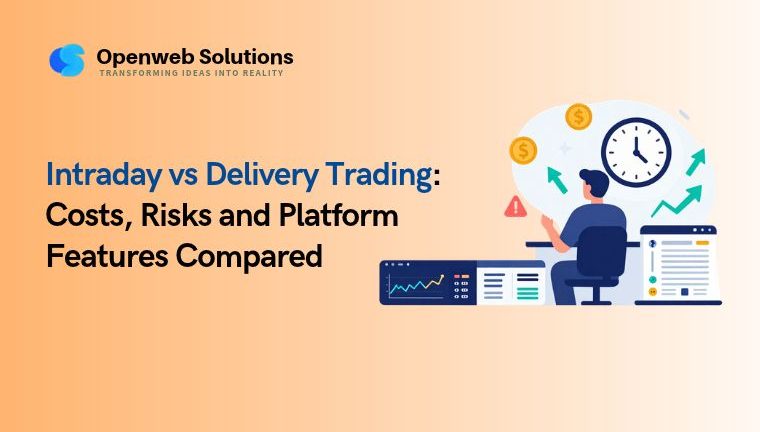
Choosing between intraday and delivery trading is an important decision for anyone participating in the stock market. Both approaches allow investors to trade equities as they differ in holding periods. Understanding intraday vs delivery trading helps traders select an approach that matches their financial goals and available time. Modern trading platforms also influence the experience by offering real-time market data and portfolio tracking. Let’s explore the differences between these two popular equity trading types.
Table of Contents
What Is Intraday Trading?
Intraday trading involves buying and selling shares within the same trading session. Traders generally close their positions before the market closes to benefit from short-term price movements. Intraday trading may suit experienced traders who can actively monitor the market and make timely decisions. Frequent transactions and rapid price fluctuations can increase costs and risks.
What Is Delivery Trading?
Understanding the delivery trading meaning is equally important. Delivery trading involves purchasing shares and holding them beyond the trading session. The shares are credited to the investor’s demat account. Delivery trading may suit investors who prefer a longer investment horizon rather than monitoring market movements throughout the day.
Intraday vs Delivery Trading: Key Differences
| Parameter | Intraday Trading | Delivery Trading |
|---|---|---|
| Holding period | Same trading day | Beyond one trading session |
| Objective | Short-term price movements | Medium- or long-term investment |
| Capital requirement | Depends on broker and margin rules | Generally full purchase value |
| Market monitoring | Frequent | Less frequent |
| Risk exposure | Short-term volatility | Market and company performance |
| Demat account | Depends on broker and product structure | Required for holding delivered shares |
| Settlement | Positions closed intraday | Shares settled into demat account |
Costs and Charges Compared
Understanding intraday trading charges and delivery-related costs is essential before placing orders. Trading expenses can reduce overall returns when transactions are frequent. Common charges in Indian equity trading include:
- Brokerage: The fee charged by a broker for executing trades.
- Exchange transaction charges: Fees imposed by the relevant stock exchange.
- GST: Applicable GST on specified brokerage and service-related charges.
- Stamp duty: Applicable according to the transaction and prevailing rules.
- DP charges: Generally applicable when shares are debited from a demat account during delivery sales.
Risks and Platform Features
Both trading methods involve financial risk as their risk profiles differ.
Intraday trading risks:
- Sudden price movements can cause rapid losses.
- Frequent trading may increase transaction expenses.
- Poor execution or delayed decisions can affect outcomes.
Delivery trading risks:
- Share prices can decline over longer periods.
- Company performance and market conditions may change.
- Capital remains invested while positions are held.
- Concentrated portfolios can increase exposure.
A capable stock market trading platform can help users manage these challenges through:
- Real-time market quotes and price alerts.
- Advanced charts and technical indicators.
- Watchlists and stock screening tools.
- Order management and execution monitoring.
- Portfolio tracking and performance reports.
How to Choose the Right Trading Type
- Choose intraday trading if you understand short-term market movements and can actively monitor positions.
- Consider delivery trading if you prefer holding shares and evaluating companies over a longer period.
- Compare brokerage rates, statutory charges, and platform capabilities before selecting a broker.
- Use risk-management tools and avoid committing money you cannot afford to lose.
Ready to Build a Smarter Stock Trading Platform?
Businesses looking to develop customized stock market applications can explore professional stock market software development solutions. Contact OpenWeb Solutions to discuss your stock market software development requirements.
Conclusion
Understanding intraday vs delivery trading helps investors make better informed decisions based on their financial goals and preferred trading style. Intraday trading focuses on short-term opportunities as delivery trading supports longer holding periods and portfolio building. A reliable trading platform with real-time data and efficient order management can improve the overall trading experience.
Frequently Asked Questions
Q1. What is the main difference between intraday and delivery trading?
Intraday trading involves closing positions within the same trading session as delivery trading involves holding purchased shares beyond the trading day.
Q2. Is intraday trading cheaper than delivery trading?
Charges vary according to brokerage plans, transaction value, statutory taxes, and applicable depository fees.
Q3. Can beginners start with delivery trading?
Delivery trading may be easier to manage for beginners who prefer longer investment horizons. Understanding company fundamentals and market risks remains essential.
Q4. Which platform features are important for equity trading?
Real-time quotes, advanced charting, stock screening, order management, portfolio tracking, and risk-management tools are useful for both trading approaches.

Partha Ghosh is the Digital Marketing Strategist and Team Lead at PiTangent Analytics and Technology Solutions. He partners with product and sales to grow organic demand and brand trust. A 3X Salesforce certified Marketing Cloud Administrator and Pardot Specialist, Partha is an automation expert who turns strategy into simple repeatable programs. His focus areas include thought leadership, team management, branding, project management, and data-driven marketing. For strategic discussions on go-to-market, automation at scale, and organic growth, connect with Partha on LinkedIn.