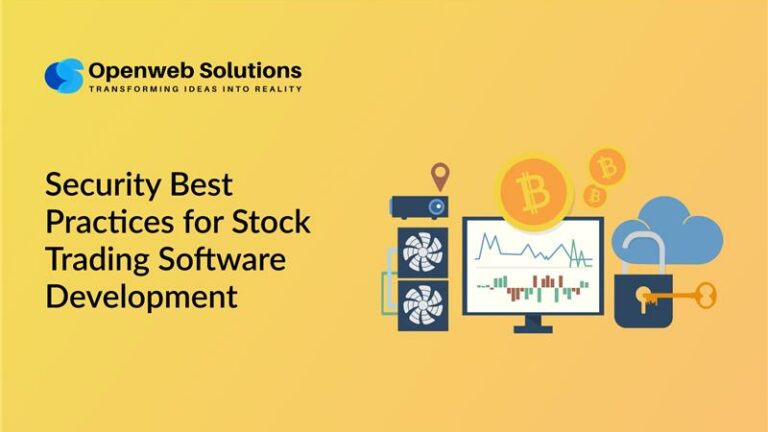
Why this matters: stock trading software powers today’s trading platforms that process millions of events each second across global markets. Whether it is stock market software or a modern electronic trading platform, security is essential for protecting sensitive data and preserving trust. A single flaw can lead to manipulation, losses, and regulatory action, which is why security must be a core pillar in trading software development.
Introduction
Understanding the Security Landscape in Trading Software
Key context: Personal data, banking details, and order flows move rapidly across networks. These platforms are prime targets for the following threats.
- Credential theft
- Insider threats
- API exploitation
- Distributed denial of service attacks
- Market manipulation
- Malware injections
Implication: A complete security strategy must cover the application layer, cloud infrastructure, and user access models.
Best Practices for Trading Software Development Security
Data Encryption for stock trading software
Lead practice: Protect sensitive data at rest and in transit.
- TLS 1.2 plus everywhere with modern ciphers
- AES 256 for data at rest in databases and storage
- Encrypted database backups with scheduled key rotation
- Data masking for logs, analytics, and test environments
- Store API keys and secrets in a vault with strict access rules
Real Time Threat Monitoring
Lead practice: Detect and respond before attackers escalate.
- Use a security information and event management platform
- Implement anomaly detection backed by machine learning
- Track login velocity, device changes, and abnormal data flows
- Automate responses to lock compromised accounts and rotate tokens
- Run tabletop exercises to validate incident playbooks
Secure API Development for stock trading software
Lead practice: Treat APIs as mission critical trading infrastructure.
- Use token based authentication with short lived tokens
- Enforce rate limits and adaptive throttling
- Validate every input and encode outputs
- Keep internal endpoints private and enforce allow lists
- Place APIs behind a gateway with security features and WAF rules
- Adopt contract testing and versioning for safer changes
Regular Penetration Testing for stock trading software
Lead practice: Find weaknesses before attackers do.
- Conduct internal and external penetration tests on a set cadence
- Run automated vulnerability scans in CI and on live environments
- Operate a responsible disclosure or bounty program
- Track remediation with owners, severity, and deadlines
- Retest after fixes to confirm closure
Security Measures for Infrastructure
Lead practice: Build a hardened runtime for trading workloads.
- Use secure cloud configurations with infrastructure as code
- Segment networks for critical services and sensitive data
- Deploy firewalls and web application firewalls with tuned rules
- Implement DDoS protection and capacity planning
- Maintain automated backup and disaster recovery with tested restores
- Patch operating systems and dependencies on a regular schedule
Common Risks That Compromise Trading Platform Security
Watch out for these pitfalls that often lead to incidents.
- Storing passwords or API keys in code or configuration files
- Missing monitoring and audit logs for sensitive actions
- Using outdated software and unpatched libraries
- Ignoring mobile app protections like certificate pinning
- Weak network segmentation that exposes core services
- Assuming compliance automatically equals security
Takeaway: Discipline and visibility prevent these issues from reaching production.
Start Developing Your Secure Trading Platform Now
Lead invitation: Want a security first build with strong execution, clean UX, and regulatory alignment? Get expert guidance on secure trading software development and ship with confidence. Contact us for a free consultation.
Conclusion
Security is a core requirement for modern trading software development. With threats evolving rapidly, teams must adopt layered controls that protect sensitive data, meet regulatory obligations, and preserve system integrity. Whether you are building stock market software or equities trading systems, applying the practices above creates a stronger foundation and safeguards both your platform and your users.
FAQs
Q1. Why is security so important in trading software?
Ans: Trading platforms handle sensitive data and real money transactions. Any breach can cause financial loss, reputational damage, and legal penalties.
Q2. How often should trading software undergo penetration testing?
Ans: Run a full test at least quarterly and after major feature releases or infrastructure changes. Always retest to verify fixes.
Q3. Can cloud based trading software be secure?
Ans: Yes. Use strong encryption, hardened network controls, identity and access management, and continuous monitoring to achieve a secure posture.
Q4. Which security controls help most against account takeovers?
Ans: Multi factor authentication, device binding, anomaly detection for logins, and rapid token revocation reduce the risk of account compromise.
Q5. What is the safest way to manage API keys and secrets?
Ans: Store them in a dedicated secrets vault, restrict access with roles and short lived tokens, rotate keys regularly, and avoid placing secrets in code or logs.

Partha Ghosh is the Digital Marketing Strategist and Team Lead at PiTangent Analytics and Technology Solutions. He partners with product and sales to grow organic demand and brand trust. A 3X Salesforce certified Marketing Cloud Administrator and Pardot Specialist, Partha is an automation expert who turns strategy into simple repeatable programs. His focus areas include thought leadership, team management, branding, project management, and data-driven marketing. For strategic discussions on go-to-market, automation at scale, and organic growth, connect with Partha on LinkedIn.