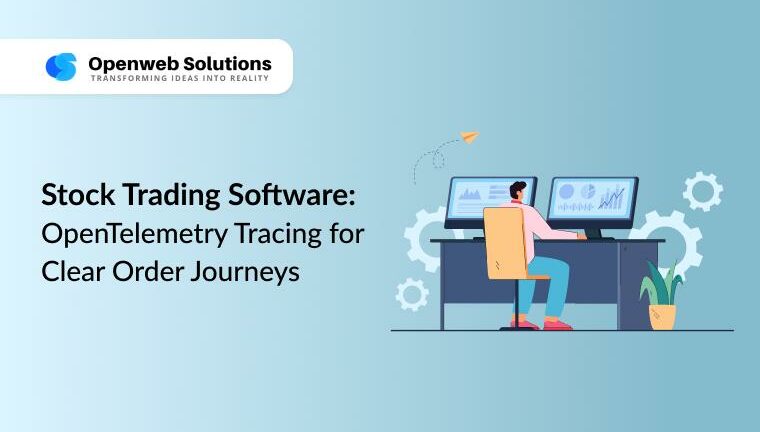
The modern market is fast, fragmented, and unforgiving. Firms expect millisecond execution, regulators expect clear audit trails, and clients expect smooth digital experiences every single market open. That is why observability and distributed tracing sit at the heart of Stock Trading Software today. Tracing lets you see every hop of an order as it travels across services. Think of it like tracking a package with live check ins from the pickup desk to the doorstep. When your team can follow each span and service hop, you fix production issues faster, prove compliance with confidence, and squeeze more performance from the same hardware budget.
Recent developments raise the bar. India’s move toward optional same day settlement compresses the window to detect and resolve issues from a full day to the same afternoon. That makes end to end visibility table stakes for any electronic trading platform serving the Indian market. In parallel, platform outages in both India and Europe remind us that uptime and data integrity are business risks, not just engineering problems. Investors are still writing checks for infrastructure that proves resilience and clarity, which means trace driven reliability is a board level story, not just an ops concern.
Why tracing now belongs at the heart of Stock Trading Software
Order flow is a relay race that spans gateways, risk checks, routers, venue adapters, market data, and persistence layers. Without traces, a partial failure in any hop can take hours to detect and days to root cause. With traces, you can pinpoint the slow or failing span in minutes, correlate the impact across symbols and clients, and roll forward a fix with evidence rather than guesswork.
For India focused teams, optional T plus zero settlement and the continuing expansion across more stocks reduce recovery time from errors. For global teams, recent exchange side glitches that led to trade cancellations show how important it is to reconstruct timelines quickly and accurately. In both cases, tracing gives you the narrative you need to brief clients, regulators, and leadership with.
OpenTelemetry explained for teams building Stock Trading Software
OpenTelemetry is an open standard that defines how your services emit telemetry data. It covers traces, metrics, and logs. Think of it as a universal language for your systems to describe what happened during an order’s journey. You add small libraries or agents to your services. These capture spans for operations like validate order, risk check, route to venue, and persist to ledger, then export data to a backend you choose. Because it is vendor neutral and community driven, OpenTelemetry lets your Stock Trading Software evolve without getting locked into a single tool chain.
Order Journey Mapping in Stock Trading Software
Distributed tracing is a map of a single order across microservices. Each step produces a span with timing, results, and context. Picture your electronic trading platform as a logistics network. An order arrives at the edge gateway like a parcel at a hub. It gets scanned for authentication and entitlement, then travels to a pre trade risk service, then to smart order routing, then to venue adaptors, and finally into post trade settlement services. Each scan creates a breadcrumb. If a hop slows down or fails, the trace shows exactly where and why.
What belongs inside the trace for Stock Trading Software
At minimum, capture spans for API receive, risk limits, throttling, smart routing, venue gateway send, venue acknowledgement, book update processing, and persistence to the order management system. Attach attributes such as client tier, symbol, order type, quantity bucket, risk profile, and venue code. Avoid placing personally identifiable information in attributes. Use trace level sampling during calm periods and switch to tail based sampling during incidents to keep useful spans without flooding storage.
How traces connect to metrics and logs
Traces answer the question what happened to this order. Metrics answer is this cluster healthy. Logs answer what did this line of code output. OpenTelemetry standardizes all three, so your stock market programs can pivot from a red dashboard to a specific order trace in two clicks, then jump into structured logs for the exact failure.
Real world use cases that pay off quickly in Stock Trading Software
Faster debugging across stock trade platforms
When a client reports a missing fill, traces reveal whether the order was throttled at risk, delayed in the router, or rejected by a venue adaptor. During the recent Nasdaq Nordic incident, highly instrumented participants could see which venues returned bad data versus which local services misbehaved. That level of visibility cuts time to mitigation. :contentReference[oaicite:2]{index=2}
Compliance ready audit trails for regulators
Traces with consistent span names and attributes give you a searchable narrative of each step from intake through settlement. With India’s optional T plus zero, same day settlement compresses reconciliation and increases the operational risk of late discoveries. Having traces that show sequencing, timestamps, and policy checks helps you satisfy inquiries quickly. :contentReference[oaicite:3]{index=3}
Performance optimization in stock market software
Your latency objectives only matter if you can see where time is spent. Tracing breaks down p95 and p99 by hop. You can identify a slow signature check, a noisy neighbor in a shared cache, or a venue adaptor with backpressure. After fixes, traces verify that each release actually reduces time to first acknowledgement and time to complete fill.
A practical tracing plan for your electronic trading platform
Step one: pick your golden order journeys
Start with the flows that matter most to revenue and risk. For many teams that means cash equities new order, cancel or replace, and allocation. In parallel, choose the top volume client entry points such as REST, WebSocket, or FIX. Make these your first journeys to observe.
Step two: adopt OpenTelemetry SDKs and auto instrumentation
Use official SDKs in your primary languages and auto instrumentation where available. Wrap critical libraries for HTTP, messaging, FIX engines, and database calls. Stay close to community semantic conventions so your data remains portable as your stock trade platforms evolve.
Step three: set a sampling and retention policy that fits markets
Use head sampling with a reasonable baseline in normal conditions. Switch to tail based sampling during incident windows to capture slow or error traces with more detail. Keep more history for opening and closing auctions and for days with exchange issues since those time windows drive most complaints.
Step four: wire traces into alerting and runbooks
Alert on error rates and latency budgets with links to example traces. Add runbook steps like open the latest trace for client X on symbol Y and compare to a known good trace. That cuts onboarding time for new engineers and removes guesswork during pressure situations.
Step five: connect tracing to business outcomes
Add attributes that your product managers and sales teams care about. For example, client segment, smart route strategy, and venue are useful slices for reports. Now you can answer questions like which route strategy gives the fastest acknowledgement for mid cap symbols, or which venue fails most often for large basket orders in the first ten minutes.
Data governance that satisfies both clients and regulators
Tracing is powerful, but financial data requires care. Encrypt in transit, mask sensitive fields, and avoid storing personal identifiers in attributes. Align retention with policy. Keep full fidelity traces long enough to satisfy your operations and audit requirements. For highly sensitive flows, export to a secure domain where only a small operations team has access, with summarized metrics exposed to wider teams.
How observability mitigates headline risk in Stock Trading Software
When a broker outage hits at the open or a venue experiences message glitches, your incident narrative defines client trust. A trace driven incident timeline lets you post accurate status updates within minutes. That kind of operational transparency turns a rough day into a credibility win. Zerodha’s early September glitch and the Nasdaq Nordic disruption are reminders that stock market programs need resilient fallback paths and observable message pipelines to restore service without guesswork.
The business case to fund tracing work right now for Stock Trading Software
Boards want to know why to fund observability during a cautious investment cycle. The answer is risk reduction and client retention. Global fintech investment has not disappeared, but investors are more selective and focus on proven models and infrastructure that de risks growth. Upgrading your Stock Trading Software with OpenTelemetry makes reconciliation faster, improves win rates in enterprise sales due to better auditability, and reduces time to resolution during exchange or broker incidents. Recent H1 figures show investment totals that reflect this reset, with the Americas leading and Europe steady. Reliability narratives that include trace evidence often tip budget decisions in your favor. :contentReference[oaicite:5]{index=5}
What to instrument across a full Stock Trading Software stack
Edge and client entry
API gateways, FIX acceptors, and WebSocket handlers. Capture client identifiers in a privacy safe way, authentication results, and backoff decisions. This is where most user visible latency starts.
Risk and throttling
Pre trade risk, exposure checks, credit limits, and kill switch evaluations. Span attributes like limit type and decision outcome help explain why orders were delayed or rejected. These spans are vital for equities trading software teams that support tiered client policies.
Smart order routing
Record route strategy, evaluated venues, chosen venue, and retry attempts. When a venue slows during the opening auction, traces will show rerouting in strategy and the timing impact. This is a key place to improve stock market software because small changes here can change client experience in minutes.
Venue adaptors
Measure send time, acknowledgement time, reject codes, and cancel replace flows. This is usually the best place to catch packet loss patterns or rate limit enforcement from a venue. Solid tracing here raises reliability across stock trade platforms both retail and institutional.
Market data and book updates
Tie ingestion and enrichment spans back to the order by symbol and session. That lets you correlate a stale quote with a missed price improvement opportunity across your electronic trading platform.
Datastores and state
Instrument order books, matching subsystems, and persistence layers. Traces that include query timings reveal noisy indexes, lock contention, or slow replication during peak windows. These insights help you tune stock market programs for auctions and news driven bursts.
Metrics that matter for stock market software
Tie your tracing work to a short list of metrics that describe client experience. A few examples are time to first acknowledgement, time to full fill, cancel or replace round trip, venue reject rate by code, and error budget burn during the open. Then add business overlays like volume weighted latency by client tier or by symbol class. These are the numbers your client coverage team can use in quarterly reviews to prove that your stock trade platforms are not just fast, they are predictably fast.
Getting started with OpenTelemetry without slowing delivery
Run a two week spike on a single high volume journey. Use official SDKs, adopt current semantic conventions, and export traces to a backend your team already knows. Share trace waterfalls with stakeholders in product and compliance so they see immediate value. Then expand to two more journeys in the next sprint and repeat. A lightweight start like this builds momentum while your Stock Trading Software continues to ship features.
Partner with Openweb Solutions to move from talk to traces
You want a team that understands trading protocols and observability. Openweb Solutions builds Stock Trading Software for brokers, exchanges, and fintech platforms, and we treat OpenTelemetry as a core engineering practice. We help you choose the right sampling strategy, map golden journeys, and wire traces into alerts and runbooks so your engineers, product managers, and compliance officers all speak the same language when seconds matter.
Where we make the difference
We instrument complex flows in equities trading software and derivatives without breaking change windows. We tune telemetry volume so you get signal without storage shock. We align trace attributes with your regulatory reporting needs while keeping client data safe. We design dashboards and trace exemplars that sales and client support can use on a busy Monday open.
FAQs
Q1. What makes OpenTelemetry a better fit for Stock Trading Software than a single vendor tool?
Ans: OpenTelemetry gives you a portable data layer. You can choose best in class backends for traces, metrics, and logs while keeping consistent span names and attributes across your services. That reduces lock in and makes platform upgrades smoother.
Q2. How does distributed tracing help during exchange side incidents?
Ans: Traces show exactly where each order slowed or failed. If a venue adaptor starts timing out, you see that hop light up across many traces and can switch routing or apply rate controls with evidence instead of guesswork. Recent European exchange side glitches are a clear example of why this level of visibility matters. :contentReference[oaicite:6]{index=6}
Q3. Do we need to trace every single request to get value?
Ans: No. Start with the highest value journeys and sample the rest. Use tail based sampling during incidents to keep slow or error traces. Over time, expand coverage to the flows that create the most tickets or the most regulatory questions.
Q4. How does observability support compliance in markets moving to faster settlement like India’s T plus zero?
Ans: Faster settlement compresses your detection and reconciliation time. Traces provide a narrative that proves when each policy check happened and why a decision was made. This is vital as India phases optional same day settlement across hundreds of stocks. :contentReference[oaicite:7]{index=7}
Q5. What signals show that tracing adoption is growing in finance and mobile trading apps?
Ans: Teams are standardizing on OpenTelemetry to connect client side and server side views, and to keep data portable across tools. The direction aligns with what builders of consumer trading apps need to measure real user experience and latency.
Conclusion
If you want fewer escalations, faster fixes, and happier clients, make OpenTelemetry the data backbone of your Stock Trading Software and shine a light on every order journey. In a world of compressed settlement windows and selective investment, clarity is your moat, and traces are the blueprint for that clarity. Ready to map your flows and put real telemetry in place with a partner that understands trading and observability front to back? Talk to Openweb Solutions about equities trading software.
Sources
- SEBI expands optional same day settlement to 500 stocks
- SEBI extends optional T plus zero deadline to November 1, 2025
- Zerodha outage acknowledged by the company
- Zerodha users report login and price update issues
- Nasdaq Nordic resumes trading after glitch and cancellations
- Nasdaq Nordic cancels some trades after technical issue
- KPMG Pulse of Fintech H1 2025 report
- KPMG Pulse of Fintech H1 2025 overview
- KPMG Pulse of Fintech H1 2025 Americas detail

Partha Ghosh is the Digital Marketing Strategist and Team Lead at PiTangent Analytics and Technology Solutions. He partners with product and sales to grow organic demand and brand trust. A 3X Salesforce certified Marketing Cloud Administrator and Pardot Specialist, Partha is an automation expert who turns strategy into simple repeatable programs. His focus areas include thought leadership, team management, branding, project management, and data-driven marketing. For strategic discussions on go-to-market, automation at scale, and organic growth, connect with Partha on LinkedIn.