Understanding the Rise of Regional Language Stock Market App Development
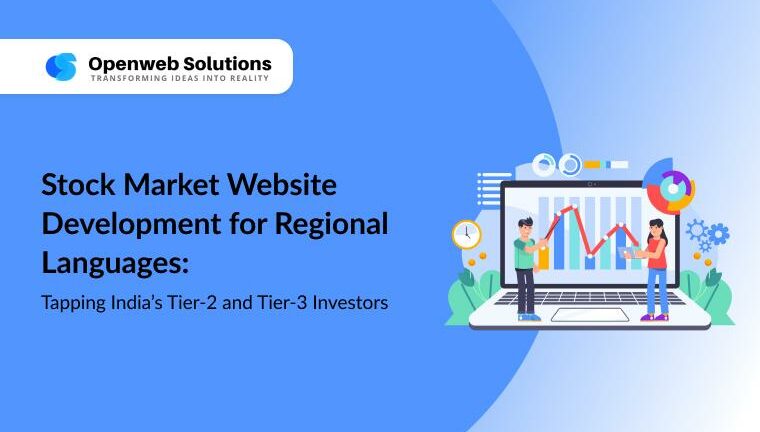
India’s stock market has been booming, with record highs on the NSE and BSE in early 2025. However, there’s a critical truth: India’s investor base is not uniform. While urban investors comfortably use English-based platforms, millions in Tier-2 and Tier-3 cities prefer engaging in their native languages. Therefore, stock market app development and stock market website development are increasingly focusing on regional language support as a strategic necessity rather than a luxury.
Recent SEBI data shows India added 16 million new Demat accounts in FY 2024–25, with over 54% originating from non-metro regions. Clearly, to capture this massive market, businesses must prioritize accessibility and trust — starting with language.
Why Regional Languages Matter in Stock Market Software Development
Bridging India’s Digital Language Divide
Historically, trading platforms and tools catered primarily to English-speaking investors. This alienated millions who think, calculate, and plan in languages like Hindi, Bengali, Marathi, Tamil, Telugu, Kannada, Gujarati, and more.
By integrating multilingual capabilities, stock market software development is enabling inclusivity. Investors who once felt excluded can now trade confidently. Importantly, this inclusivity isn’t just about language translation—it’s about creating user experiences that feel native and trustworthy.
Consider this:
-
Over 52% of internet users in India prefer content in their local language.
-
Apps offering regional support see up to 2.5x higher engagement rates in Tier-2 and Tier-3 markets.
Stock Market App Development: Mobile-First, Multilingual, and Future-Ready
Mobile-First Adoption in Regional Markets
In India, mobile-first is no longer a trend—it’s the reality. Over 95% of India’s internet users access the web via smartphones. In smaller cities, where PC ownership is low, mobile apps are the only gateway to digital services, including trading.
Hence, stock market app development must prioritize:
-
Multilingual UI/UX for easy navigation.
-
Voice-enabled commands for older or less literate users.
-
Regional push notifications for market updates.
-
KYC and compliance forms in local languages.
This goes beyond mere translation. Apps like Zerodha Kite and Groww have introduced regional languages to attract first-time investors outside metros, contributing to their explosive growth.
The Crucial Role of Stock Market Website Development in Regional Outreach
While mobile apps are vital, web platforms remain indispensable. Many traders—especially serious investors—still prefer larger screens for charts, technical analysis, and market research. This makes stock market website development equally critical in tapping India’s regional market.
Stock Market Website Development and Regional Accessibility
A multilingual website can:
-
Offer personalized dashboards in local languages.
-
Deliver regional market news and company updates.
-
Integrate chatbots that speak the user’s language.
-
Enable vernacular voice search for quick information retrieval.
The Indian government’s Digital India initiatives further push digital literacy, creating new demand for accessible trading platforms across devices.
Localization: The True Differentiator in Stock Market Software Development
Beyond Translation — Embracing Localization
Localization involves adapting design, tone, content, and features to regional tastes and behavior. In stock market software development, this means:
-
Customizing icons, colors, and symbols per cultural preferences.
-
Incorporating regional investment trends (e.g., interest in local stocks).
-
Offering educational content and webinars in regional languages.
For instance, regional investors may prefer investing in state-run enterprises or local businesses they trust. Apps that display relevant local stocks and news build significant trust and engagement.
Benefits of Regional Language Stock Market App Development
Businesses investing in stock market app development with regional focus enjoy:
-
Higher User Acquisition: Tapping untapped Tier-2 and Tier-3 markets.
-
Increased Engagement: Users spend more time and trade more on apps in their language.
-
Trust and Loyalty: Regional communication builds confidence, especially among first-time investors.
-
Market Differentiation: Few competitors fully localize their offerings.
Key Features for Successful Regional Stock Market App Development
To effectively serve regional audiences, developers should implement:
✅ Multilingual Interfaces: Seamlessly toggle between languages.
✅ Voice Search & Commands: Users can say, “निफ्टी का भाव क्या है?” and get instant updates.
✅ Regional Push Notifications: Alerts in the user’s chosen language.
✅ Vernacular Chatbots: Answer FAQs in the local language.
✅ Localized Content: Educational blogs, videos, and news in local dialects.
Leading platforms such as Upstox and Angel One are already experimenting with these features to gain a competitive edge.
Challenges in Regional Stock Market Website Development
Despite the opportunities, several challenges persist:
-
Accurate Translation: Financial jargon must be translated carefully to avoid misunderstandings.
-
Maintaining Consistent UX: Switching between languages must feel seamless.
-
Regulatory Compliance: Content must align with SEBI guidelines across languages.
Yet, given the market potential, these challenges are worth overcoming.
How Indian Companies are Leading the Regional Language Revolution
-
Zerodha Kite supports regional languages, reporting increased adoption from smaller cities.
-
Groww introduced regional language tutorials, witnessing higher first-time investor sign-ups.
-
Paytm Money provides vernacular support, making investment tools more accessible.
These success stories show that regional language inclusion is not optional—it’s a powerful growth lever.
The Global Perspective on Multilingual Trading Platforms
Globally, platforms like Robinhood and eToro are beginning to explore multilingual offerings for non-English-speaking markets. However, India’s linguistic diversity is unique. With over 22 official languages and hundreds of dialects, the Indian market demands a far more nuanced approach in stock market app development and stock market website development.
Conclusion: Regional Language is the Future of Stock Market Software Development
India’s Tier-2 and Tier-3 cities hold the key to the next wave of retail investing. Smart, localized stock market app development and stock market website development are unlocking this vast potential. Businesses that embrace multilingual features and regional content are better positioned to democratize investing, improve financial inclusion, and drive economic growth.
For companies seeking sustainable growth, stock market software development focused on regional languages isn’t just good practice—it’s a strategic necessity. Investing in this future today ensures businesses can serve India’s evolving investor base with precision, empathy, and technological excellence.
Frequently Asked Questions (FAQs)
Q1. Why is regional language support crucial for stock market platforms?
Ans: Regional language support makes trading platforms accessible to millions of potential investors in Tier-2 and Tier-3 cities who prefer their native language.
Q2. How does stock market app development benefit from regional focus?
Ans: Apps with regional language support see higher engagement, improved retention, and increased trust among non-urban investors.
Q3. What is localization in stock market software development?
Ans: Localization tailors the platform’s design, content, and features to cultural and linguistic preferences, creating a more comfortable experience for regional users.
Q4. Are there challenges in regional language implementation?
Ans: Yes, including accurate translation of financial terms, ensuring consistent UX, and managing regulatory compliance across languages.
Q5. How can businesses begin regional stock market website development?
Ans: Start by researching user languages, hiring skilled localization experts, and developing flexible UI frameworks that support multilingual integration.

Partha Ghosh is the Digital Marketing Strategist and Team Lead at PiTangent Analytics and Technology Solutions. He partners with product and sales to grow organic demand and brand trust. A 3X Salesforce certified Marketing Cloud Administrator and Pardot Specialist, Partha is an automation expert who turns strategy into simple repeatable programs. His focus areas include thought leadership, team management, branding, project management, and data-driven marketing. For strategic discussions on go-to-market, automation at scale, and organic growth, connect with Partha on LinkedIn.