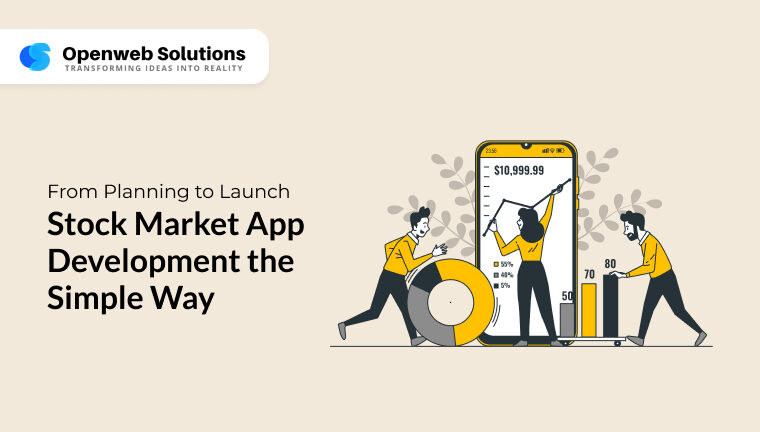
In India and globally, the rise of retail investors and fintech adoption has accelerated the demand for high-performing trading platforms. If you’re looking to break into this space, stock market app development is no longer a luxury—it’s a necessity. From beginners to seasoned investors, users now expect real-time updates, secure transactions, and seamless user experiences. Fortunately, building such an app doesn’t have to be overwhelming. By following a strategic and simplified approach, businesses can deliver robust trading apps efficiently and cost-effectively.
Step 1: Know Your Audience and App Objective
Every successful stock market app development project begins with clear market segmentation. Are you building for:
-
First-time investors?
-
Day traders?
-
Portfolio managers or HNIs?
This clarity helps define feature scope, compliance requirements, and design language early on. As per 2024 reports from SEBI and Statista, India’s online trading user base is expected to cross 120 million by 2026. Identifying your niche today is key to standing out tomorrow.
Step 2: 🧩 Core Features to Prioritize in Stock Market App Development
Launching with a Minimum Viable Product (MVP) helps you test the waters while controlling costs. Your MVP must include:
-
Real-time market data and charts
-
User onboarding (with KYC integration)
-
Watchlists and portfolio tracking
-
Secure logins and trade execution
-
Push notifications and market alerts
Later, you can add advanced features like robo-advisors, dark mode, multi-language support, and AI-driven analytics.
Step 3: 🏗️ Choosing the Right Tech Stack for Stock Market Software Development
Scalability is crucial in stock market software development. Use technologies like:
-
Frontend: React Native or Flutter for cross-platform apps
-
Backend: Node.js, Python (Django), or Java Spring Boot
-
Database: PostgreSQL or MongoDB for high-volume data handling
-
Hosting: AWS, Google Cloud, or Microsoft Azure for elasticity and uptime
Choosing the right stack reduces maintenance overhead and enhances performance.
Step 4: Prioritize Security and Legal Compliance
Security is a non-negotiable element in fintech. A breach can cost more than money—it can cost trust.
✔️ End-to-end encryption
✔️ Two-factor authentication
✔️ Role-based access controls
✔️ SEBI (India) and SEC (US) regulatory compliance
✔️ Secure Payment Gateways (Razorpay, Stripe)
In India, non-compliance with SEBI mandates can halt your app launch. Make security part of every sprint, not an afterthought.
Step 5: Leverage Data Through Smart APIs
The success of any trading platform hinges on data accuracy. Use APIs from trusted sources like:
-
NSE, BSE (India)
-
Alpha Vantage, IEX Cloud, or Polygon (Global)
-
News APIs (Bloomberg, Yahoo Finance)
A reliable data backend improves app performance and keeps traders informed in real-time—critical in fast-moving markets.
Step 6: Simplify with User-Centric Design
UX can make or break your app. In today’s attention economy, clean and intuitive interfaces ensure user retention.
💡 Tips for great design:
-
Use visual hierarchy: prioritize charts, watchlists, and action buttons
-
Keep navigation minimal
-
Test usability across devices (mobile, tablet, desktop)
A user-first design approach boosts your app’s success rate and builds credibility.
Step 7: Add Personalization and Smart Alerts
Modern investors want more than static dashboards—they want customization.
-
Set price-based or volume-based alerts
-
Custom dashboards based on holdings
-
News filters tailored to watchlists
These features, while small, dramatically increase user satisfaction and engagement—especially important in stock market website development where large screens allow more interactive content.
Step 8: 🧪 Testing Strategy in Stock Market App Development Projects
Don’t launch without comprehensive testing. Conduct:
-
Functional testing (core features, trades, data flows)
-
Load testing (for high-traffic hours)
-
Penetration testing (for vulnerabilities)
-
Beta testing (for real-world feedback)
Testing ensures your app meets both technical and compliance benchmarks before going live.
Step 9: 🔄 Post-Launch Support for Stock Market Software and Web Apps
Launching is just the beginning. Regular updates based on market trends, customer feedback, and new regulations will help your platform stay relevant.
📈 Offer:
-
24/7 customer support (chatbots or live agents)
-
Feature update cycles every quarter
-
Bug fixes and performance enhancements
This is where the difference between a one-time app and a long-term fintech brand is made.
✅ Conclusion: Why Smart Stock Market Website Development Matters
Stock market app development may seem daunting, but a clear roadmap simplifies the process. By prioritizing compliance, UX, scalability, and ongoing iteration, you set the foundation for a long-term, revenue-generating platform. Whether your goal is app-only trading or seamless cross-device experiences, a well-executed launch backed by solid stock market software development and intelligent stock market website development practices will ensure market success.
Frequently Asked Questions (FAQs)
Q1. What’s the average cost of stock market app development in India?
Ans: Depending on features and platform, it can range between ₹20–₹80 lakhs ($25,000–$100,000+).
Q2. Is cross-platform app development effective for stock trading apps?
Ans: Yes, React Native or Flutter can drastically reduce development time while offering near-native performance.
Q3. Which APIs are recommended for live stock data integration?
Ans: For India, NSE and BSE provide APIs. For global data, IEX Cloud, Polygon, and Alpha Vantage are commonly used.
Q4. How does stock market website development complement mobile apps?
Ans: Web platforms offer extended dashboards and analytics ideal for desktop traders, complementing mobile accessibility.
Q5. What are the top compliance requirements for trading apps in India?
Ans: Compliance with SEBI, RBI (for payment systems), and KYC/AML guidelines is essential.

Partha Ghosh is the Digital Marketing Strategist and Team Lead at PiTangent Analytics and Technology Solutions. He partners with product and sales to grow organic demand and brand trust. A 3X Salesforce certified Marketing Cloud Administrator and Pardot Specialist, Partha is an automation expert who turns strategy into simple repeatable programs. His focus areas include thought leadership, team management, branding, project management, and data-driven marketing. For strategic discussions on go-to-market, automation at scale, and organic growth, connect with Partha on LinkedIn.