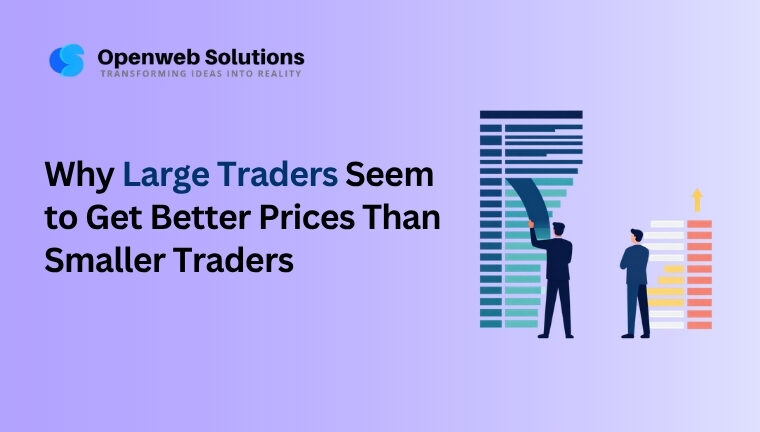
A major fund may buy thousands of shares at a favorable average price as a retail trader pays slightly more for the same stock. This difference can seem unfair when markets move quickly. The reality is that institutional traders benefit from advantages in technology and market access. These advantages do not mean every large trader wins as they can significantly improve the cost and efficiency of trading. Understanding these differences also helps explain why modern stock market software focuses on real-time data and intelligent order execution.
Table of Contents
Why Institutional Traders Get Better Prices
The primary reason why institutional traders get better prices is that they operate with resources that most retail traders do not have. Large institutions often use sophisticated trading platforms and algorithms designed to identify the best available prices. They can also access multiple liquidity sources and execute orders across different venues.
Institutions typically negotiate lower brokerage fees and may receive volume-based pricing. Even a small reduction in trading costs can make a substantial difference when millions of shares are traded. Institutions also have dedicated teams that analyze market conditions and execution quality.
How Order Size Affects Execution
Order size plays an important role in determining the price a trader receives. Imagine a stock that has 1,000 shares available at ₹100 and another 2,000 shares available at ₹100.10. A retail trader buying 100 shares may receive ₹100. But an institution buying 10,000 shares could consume the available shares at ₹100 and then continue buying at higher prices. Institutional traders use execution strategies that spread orders over time or across multiple trading venues. These strategies can help them achieve a better average price than simply placing one large market order.
High-Frequency Trading Explained for Retail
HFT uses powerful computers and extremely fast market data connections to execute large numbers of trades in very short periods. High frequency trading explained for retail means understanding that HFT firms compete to identify small price differences and provide liquidity.
HFT systems may analyze order books and trading patterns in milliseconds. This speed can create advantages as it does not mean HFT firms know the future.
Is HFT Unfair to Small Traders?
The question “is HFT unfair to small traders?” does not have a simple yes-or-no answer.
HFT can create concerns because professional firms have faster technology and may react to market information before slower participants. HFT also contributes to market liquidity and can help narrow bid-ask spreads. This means traders can buy and sell at prices closer to the current market value. The bigger issue is whether markets provide fair access to information and effective regulation.
What Retail Traders Can Do
They can improve their trading experience by using better tools and practices.
- A limit order lets traders specify the maximum price they are willing to pay or the minimum price they are willing to accept.
- Stocks with higher trading volumes and tighter spreads generally offer better execution opportunities.
- Rapidly chasing price movements can increase slippage and transaction costs.
- Real-time quotes and price alerts can help traders make more informed decisions.
- Modern stock market platforms can provide charting and execution tools that help retail traders compete more effectively.
Build Smarter Trading Software for Your Business
Openweb Solutions develops customized stock-market software with features such as real-time quotes and multi-exchange support. Our experienced development team can help turn your requirements into a scalable software solution.
Get in touch now
Conclusion
Large traders often appear to get better prices because they have access to advanced technology and greater market expertise. These advantages can improve their average execution price as they do not guarantee profits. Understanding why institutional traders get better prices is the first step toward improving execution. Smaller traders can make more informed decisions in today’s fast-moving markets.
FAQs
Q1. Do institutional traders always get better prices?
Institutions may benefit from lower costs and better execution tools as large orders can also create market impact and make trading more difficult.
Q2. What is high-frequency trading?
High-frequency trading is an automated trading approach that uses powerful computers and algorithms to execute trades at very high speeds.
Q3. Is HFT unfair to retail traders?
HFT can create speed advantages for professional firms as it also contributes to liquidity and tighter spreads.
Q4. Can retail traders compete with institutional traders?
Retail traders cannot usually compete on speed or resources as they can improve execution through limit orders.

Partha Ghosh is the Digital Marketing Strategist and Team Lead at PiTangent Analytics and Technology Solutions. He partners with product and sales to grow organic demand and brand trust. A 3X Salesforce certified Marketing Cloud Administrator and Pardot Specialist, Partha is an automation expert who turns strategy into simple repeatable programs. His focus areas include thought leadership, team management, branding, project management, and data-driven marketing. For strategic discussions on go-to-market, automation at scale, and organic growth, connect with Partha on LinkedIn.