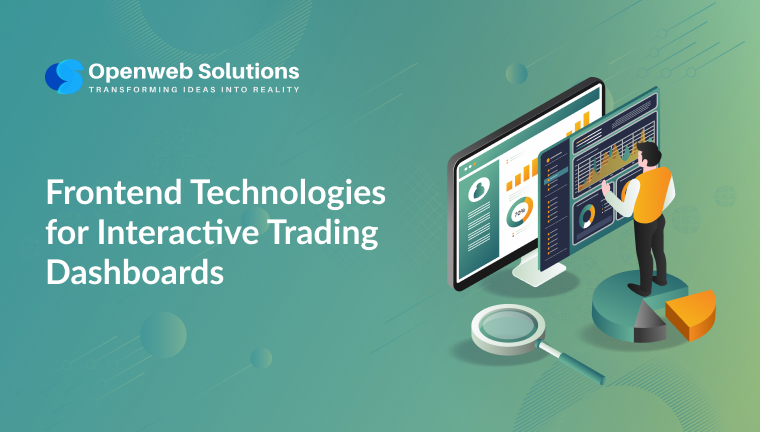
In today’s fast-paced financial ecosystem, a stock market desktop app must deliver a smooth, interactive, and real-time trading experience. Traders expect lightning-fast updates, visually rich dashboards, and intuitive controls that allow them to make split-second decisions. With the rise of the stock trading app and trading software, frontend development has become a critical factor in determining the success of trading platforms. A well-designed frontend not only enhances user experience but also improves performance, engagement, and decision-making efficiency. In this blog, we will explore the top front-end technologies used to build interactive trading dashboards and how they contribute to creating the best app.
Table of Contents
- Importance of Frontend in Trading Dashboards
- Key Features of Interactive Trading Interfaces
- Top Frontend Frameworks for Trading Apps
- Data Visualization Libraries for Financial Charts
- Real-Time Data Handling Technologies
- UI/UX Design Principles for Trading Platforms
- Performance Optimization Techniques
- Future Trends in Trading Dashboard Frontends
- Conclusion
- FAQs
Importance of Frontend in Trading Dashboards
The frontend is the face of any stock market desktop app. It directly impacts how traders interact with live market data, trading tools, analytical charts, and portfolio management. A poorly designed interface can lead to confusion, delayed decisions, and financial losses. On the other hand, a responsive and intuitive frontend enhances user confidence and efficiency.
Key Features of Interactive Trading Interfaces
To qualify as the best app for stock marketing, a trading dashboard must include real-time price updates, advanced charting tools, custom alerts and notifications, multi-panel dashboards, fast order execution interface, and advanced filtering and search. These features require robust frontend technologies capable of handling high-frequency data and complex UI components.
Top Frontend Frameworks for Trading Apps
- React.js is one of the most popular libraries for building dynamic interfaces in a stock market app. It has component-based architecture, high performance with virtual DOM, and strong ecosystem for financial dashboards.
- Angular is ideal for enterprise-grade automated trading software. The key benefits are built-in tools and structure, strong TypeScript support, and scalable for complex trading systems.
- Vue is lightweight and flexible, making it suitable for startups to build an AI stock trading app. The advantages are easy integration, fast rendering, and simple learning curve.
Data Visualization Libraries for Financial Charts
Charts are the backbone of any trading dashboard and without effective visualization, even the best data is useless. These are the popular libraries that are mentioned below:
- D3.js is highly customizable for complex charts
- Chart.js is simple and lightweight
- High charts are ideal for financial dashboards
- Trading View Charting Library is industry-standard for trading platforms
These tools help create candlestick charts, volume indicators, moving averages, and technical analysis overlays.
Real-Time Data Handling Technologies
Interactive dashboards rely heavily on real-time data streaming. The key technologies are WebSockets to enable instant data updates; Server-Sent Events is efficient for continuous streams, and GraphQL Subscriptions for real-time APIs. These technologies ensure that users of stock trading apps receive live updates without refreshing the page.
UI/UX Design Principles for Trading Platforms
The best practices are minimal latency UI to avoid delays in interactions; dark mode support is preferred by traders. Customizable dashboards can arrange widgets, clear typography and color coding, and responsive layouts which are adaptable across devices. A well-designed UI helps transform an ordinary platform into the best app for stock marketing.
Performance Optimization Techniques
Speed is everything in trading applications. Optimization Strategies are lazy loading of components, efficient state management, code splitting, CDN usage for assets, and Web Workers for heavy computations. For automated trading software, performance optimization ensures smooth execution even during high market volatility.
Future Trends in Trading Dashboard Frontends
The future of front-end development in trading apps is evolving rapidly. The emerging trends are AI-powered dashboards in trading apps, voice-enabled trading interfaces, AR data visualization, micro-frontend architecture, and PWAs. These innovations will redefine how users interact with a stock market desktop app.
Build an Interactive Trading Platform with Us
Partner with experienced developers to create a stock market desktop app for your business needs. Get in touch today!
Conclusion
Frontend technologies play a pivotal role in shaping modern trading platforms. From real-time data handling to advanced charting and intuitive UI design, every component contributes to delivering a trading experience.
Whether you’re building a stock market desktop app or automated trading software, choosing the right frontend stack is essential for success. By leveraging modern frameworks and performance techniques, businesses can create the best app for stock marketing that stands out in a competitive market.
Thank you for reading.
FAQs
Q1. What is the best frontend framework for a stock market desktop app?
React.js is widely preferred due to its performance, flexibility, and strong ecosystem for building interactive dashboards.
Q2. Why is real-time data important in trading dashboards?
Real-time data allows traders to make instant decisions, which is critical in volatile markets.
Q3. Can front-end technologies impact trading performance?
Yes, a fast and responsive frontend reduces delays and improves user experience, directly impacting trading efficiency.
Q4. What makes an ai stock trading app different?
It uses machine learning algorithms to analyze market data and automate trading decisions.

Partha Ghosh is the Digital Marketing Strategist and Team Lead at PiTangent Analytics and Technology Solutions. He partners with product and sales to grow organic demand and brand trust. A 3X Salesforce certified Marketing Cloud Administrator and Pardot Specialist, Partha is an automation expert who turns strategy into simple repeatable programs. His focus areas include thought leadership, team management, branding, project management, and data-driven marketing. For strategic discussions on go-to-market, automation at scale, and organic growth, connect with Partha on LinkedIn.