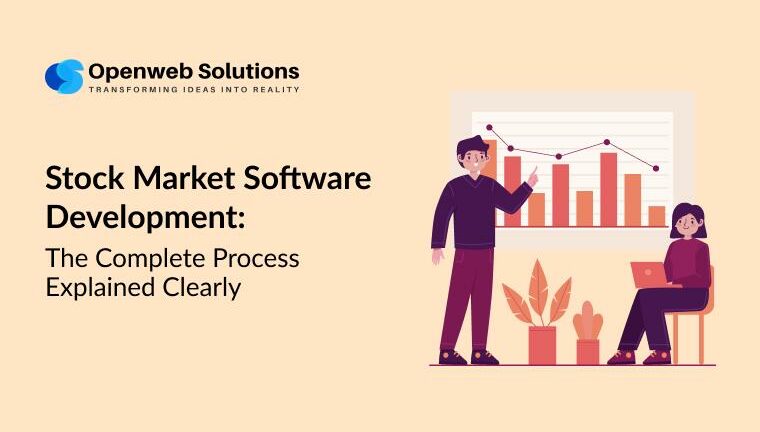
The global rise of digital trading has transformed how investors and financial institutions operate. Today, traders expect real-time data, advanced analytics, seamless execution, and high security delivered through powerful digital platforms. This growing demand has made stock market software development a critical focus area for fintech companies and enterprises.
Whether you plan to build stock trading software or enterprise-grade stock trade platforms, understanding the complete development lifecycle is essential. This blog explains the end-to-end process of trading platform software development, clearly breaking down each stage from concept to launch.
Table of Contents
- Understanding Stock Market Software
- Step 1: Requirement Analysis and Planning
- Step 2: Market Data Integration and Architecture Design
- Step 3: UI/UX Design for Stock Market Software
- Step 4: Core Stock Market Software Development
- Step 5: Security and Performance Optimization
- Step 6: Testing and Quality Assurance
- Step 7: Deployment and Post-Launch Support
- Conclusion
- Frequently Asked Questions
Understanding Stock Market Software
Stock market software refers to digital platforms that enable users to analyze markets and execute trades.
These platforms operate across exchanges such as BSE, NSE, and global markets.
- Retail stock trading software for individual investors
- Advanced share market software for active traders
- Institutional-grade stock trade platforms
- Web and mobile trading applications
While each platform differs in complexity, the stock market software development process follows a structured and proven approach.
Step 1: Requirement Analysis and Planning in Stock Market Software Development
A successful trading platform begins with clear planning and requirement analysis.
- Identifying target users
- Defining supported asset classes
- Selecting exchanges and data feeds
- Choosing web, mobile, or hybrid platforms
- Defining regulatory and compliance needs
A clear roadmap ensures cost efficiency and faster development.
Step 2: Market Data Integration and Architecture Design
Real-time market data is the backbone of stock market software development.
- Live price feeds
- Historical market data
- Charting and analytics engines
- Order management systems
- Portfolio management modules
Step 3: UI/UX Design for Stock Market Software
User experience plays a critical role in platform adoption.
- Intuitive dashboards
- Customizable watchlists
- Interactive charts
- Fast order placement
- Responsive mobile design
Step 4: Core Stock Market Software Development and Feature Implementation
This stage represents the core of stock market software development.
- User authentication and access control
- Real-time streaming quotes
- Technical and fundamental analysis tools
- Trade execution and tracking
- Custom alerts and notifications
- Reports and analytics dashboards
Step 5: Security and Performance Optimization
Security is non-negotiable in trading platform software development.
- Data encryption
- Secure APIs
- Two-factor authentication
- Role-based access control
- Regular security audits
Step 6: Testing and Quality Assurance
Extensive testing ensures platform reliability and accuracy.
- Functional testing
- Load and stress testing
- Security testing
- API testing
- User Acceptance Testing (UAT)
Step 7: Deployment and Post-Launch Support
After testing, the stock market software is deployed to production.
- Performance monitoring
- Bug fixes and enhancements
- Scalability improvements
- Ongoing technical support
Conclusion
Building a reliable trading solution goes far beyond writing code.
From planning to deployment, stock market software development blends technology, finance, security, and user experience to deliver scalable trading platforms.
With the right development strategy, businesses can build high-performance stock trading software that ensures long-term success in the fintech ecosystem.
Frequently Asked Questions
Q1. How long does stock market software development take?
Ans: Development timelines usually range from 3 to 9 months, depending on features and complexity.
Q2. Is custom stock trading software better than ready-made platforms?
Ans: Yes. Custom solutions offer flexibility, scalability, and full ownership of features and code.
Q3. Can trading platforms support multiple exchanges?
Ans: Yes. Modern stock trade platforms support multiple domestic and international exchanges.
Q4. Is mobile app development included?
Ans: Yes. Most trading platforms include both web and mobile applications.
Q5. How secure is stock market software?
Ans: With encryption, authentication, and compliance standards, modern share market software is highly secure.

Partha Ghosh is the Digital Marketing Strategist and Team Lead at PiTangent Analytics and Technology Solutions. He partners with product and sales to grow organic demand and brand trust. A 3X Salesforce certified Marketing Cloud Administrator and Pardot Specialist, Partha is an automation expert who turns strategy into simple repeatable programs. His focus areas include thought leadership, team management, branding, project management, and data-driven marketing. For strategic discussions on go-to-market, automation at scale, and organic growth, connect with Partha on LinkedIn.